


PSG® Markets
Pumps for Industrial Wastewater Treatment Systems
Industrial wastewater pumping systems play a critical role in maintaining compliance, protecting downstream equipment and ensuring uninterrupted plant operations.
Contributors
This page was developed with input from PSG® subject-matter experts who support oil & gas terminals and downstream operations across North America, bringing real-world insight into fuel transfer systems, pump selection and long-term reliability.
Unlike clean water transfer, industrial wastewater often contains suspended solids, corrosive chemicals, hydrocarbons, variable pH levels and entrained air. These characteristics directly impact pump performance, material selection and long-term reliability.
Industrial wastewater pumping solutions must be engineered for fluctuating process conditions, unpredictable solids loading and chemically aggressive environments. Proper pump selection reduces downtime, improves system efficiency and lowers total lifecycle cost.
Understanding Industrial Wastewater Applications
Industrial wastewater application markets can vary significantly depending on the facility and process. It may include produced water systems, chemical transfer streams, oil-contaminated discharge, solvent-laden effluent or sludge with suspended solids.
Because fluid composition can change throughout a production cycle, wastewater pump systems must tolerate variability. Flow rates may shift, solids concentration may increase unexpectedly and temperature swings may alter viscosity.
These factors must be evaluated before selecting pump technology.
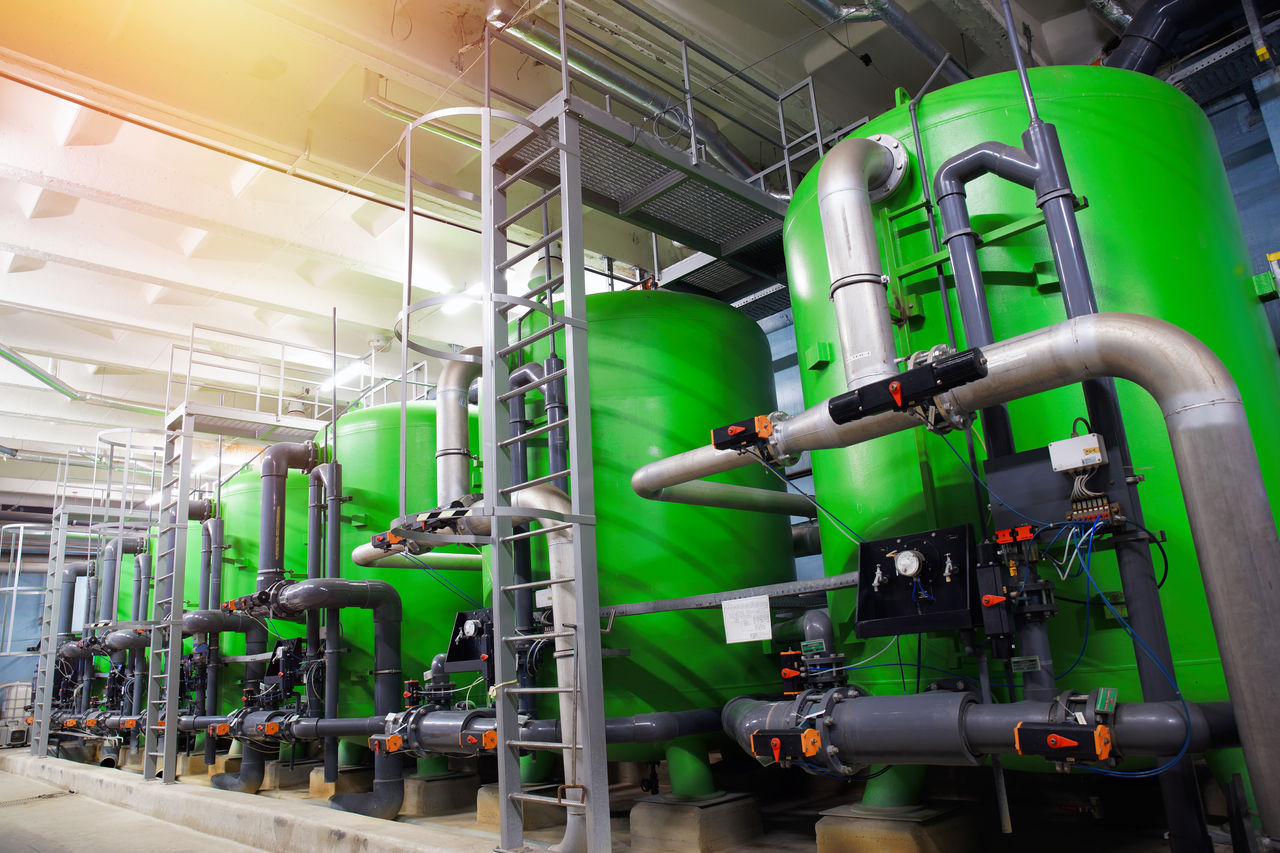
Engineering Challenges in Industrial Wastewater Pumping
Pump failures in wastewater systems are often due to system-level oversights rather than product defects.
Suction Conditions and NPSH
Suction-side design is one of the most overlooked factors in industrial wastewater pumping. Undersized suction piping, excessive friction losses or insufficient available NPSH can lead to cavitation, reduced flow rate and premature wear.
Centrifugal pumps are particularly sensitive to inadequate suction conditions. Proper inlet pipe sizing and minimizing suction run length are critical design considerations.
Chemical Compatibility
Industrial wastewater frequently contains acids, caustics, solvents and cleaning agents. Material compatibility must be evaluated not only for the pump casing, but also for diaphragms, elastomers, seals and fasteners.
Improper material selection can result in swelling, corrosion, seal degradation or diaphragm fatigue. In chemically aggressive environments, corrosion resistance often determines pump lifespan.
Solids and Abrasion
Wastewater streams may carry grit, sludge, pigments or metallic fines. Abrasive media accelerate internal wear and may require slower operating speeds or more robust material construction.
Not all pump technologies tolerate solids equally. Matching the pump to the solids load is essential for reliability.
Pump Technologies Used in Industrial Wastewater Systems
Industrial wastewater pumping solutions may incorporate multiple pump technologies depending on process stage and fluid characteristics.
Air-Operated Double Diaphragm (AODD) Pumps
Wilden® and All-Flo™ AODD pumps are widely used in wastewater applications due to their versatility and durability.
These pumps are self-priming, capable of running dry and well-suited for handling solids and slurries. Their seal-less design makes them effective in chemically aggressive environments.
AODD pumps are commonly used for sump evacuation, sludge transfer and intermittent discharge applications.
However, they require an adequate compressed air supply and produce pulsating flow. System air capacity must be evaluated to achieve target flow rates.
Centrifugal Pumps
Griswold® centrifugal pumps are typically used for high-volume wastewater transfer where solids loading is minimal.
They provide smooth, continuous flow and operate efficiently with low-viscosity fluids. These pumps are frequently used for clarified effluent transfer, basin circulation and washdown recovery systems.
Because centrifugal pumps are not inherently self-priming and are sensitive to suction conditions, careful system design is essential.
Rotary Vane Pumps
Blackmer® sliding vane pumps are often selected for wastewater streams containing oils or hydrocarbons.
Their strong self-priming capability and efficiency at moderate viscosities make them suitable for oil-water separator discharge and hydrocarbon recovery systems. Some designs can handle vapor-liquid mixtures effectively.
Sliding vane pumps are less tolerant of heavy abrasives and require proper maintenance practices.
Design Considerations for Wastewater Pump Systems
Industrial wastewater pump systems must be evaluated holistically rather than focusing solely on flow and pressure.
Material construction should address corrosion resistance, abrasion tolerance and chemical compatibility. Seal selection must consider solids content, temperature and environmental compliance requirements.
In applications with fluctuating sump levels, pump technologies capable of dry-run tolerance provide additional protection against damage.
Reliability often outweighs initial purchase price when evaluating wastewater pumping solutions. Energy consumption, maintenance frequency, spare part availability and downtime impact all contribute to total lifecycle cost.
Maintenance and Operational Considerations
Industrial wastewater environments are demanding. Maintenance planning should reflect real-world operating conditions.
Routine wear components may include diaphragms and valve assemblies in AODD pumps, bearings and seals in centrifugal pumps and vanes in sliding vane pumps.
Monitoring for increased vibration, unusual noise or reduced flow rate helps identify early performance degradation. Maintaining genuine spare parts on-site reduces unplanned downtime and production interruption.
Why AODD Pumps Are Commonly Selected for Industrial Wastewater Sludge and Chemical Handling.
Industrial wastewater often contains suspended solids, sludge and aggressive chemicals that challenge many pump technologies. In these conditions, air-operated double diaphragm (AODD) pumps are commonly selected because their operating characteristics align well with sludge handling and chemical transfer duty.
AODD pumps are self-priming and capable of running dry without damage, making them well suited for wastewater sumps and collection points where fluid levels and suction conditions fluctuate. Their ability to start, stop and reprime reliably helps reduce unplanned downtime.
Sludge and solids handling is another key consideration. Wastewater streams may include grit, fibrous material or entrained air that causes clogging or seal failure in other pump types. AODD pumps use flexible diaphragms and check valves rather than tight internal clearances, allowing them to pass solids and slurries with reduced wear and no seal leakage.
Chemical compatibility also drives AODD selection. With multiple material and elastomer options and a seal-less design, AODD pumps are well suited for acids, caustics, solvents and treatment chemicals common in industrial wastewater systems.
Explore Industrial Wastewater Pumping Solutions
Selecting the appropriate industrial wastewater pumping solution requires a thorough understanding of fluid properties, system layout and operating conditions.
Use the Pump Finder tool to identify pump options by flow and pressure requirements. For application guidance, contact PSG® Store support.
Contributors
Steve Cox
Steve Cox has extensive experience supporting industrial pump applications across manufacturing, energy and wastewater environments. His background spans diaphragm, vane and centrifugal technologies with a focus on reliability and serviceability in demanding field conditions.
Doug Cumpston
Doug Cumpston has decades of experience in rotating equipment and positive displacement pump applications, including downstream oil & gas and industrial fluid handling systems. His perspective emphasizes system-level evaluation, suction conditions and long-term performance.
Frequently Asked Questions About Industrial Wastewater Pumping
In many facilities, redundancy is recommended. Wastewater systems are often tied to production continuity. Installing a duplex configuration or standby pump allows maintenance or repair without interrupting discharge operations, reducing the risk of production shutdowns.
Monitoring typically includes tracking flow rate, discharge pressure, vibration and noise. A sudden drop in flow or increase in vibration may indicate wear, clogging or cavitation. In critical systems, facilities may use flow meters or pressure sensors to detect performance degradation early.
Industrial wastewater composition can vary due to process shifts, cleaning cycles or chemical changes. Variations in pH, solids content or viscosity can impact pump materials and performance. Regular review of process changes ensures pump materials and seals remain compatible with evolving fluid characteristics.
In solids-bearing or abrasive wastewater streams, a seal flush system can help protect mechanical seals from premature wear. Seal flushing introduces clean fluid to the seal faces, extending seal life and reducing leakage risk in harsh environments.
Higher solids concentration increases fluid density and resistance to flow. This can impact required horsepower, discharge pressure and internal wear rates. Pumps must be sized not only for flow rate, but also for solids percentage and particle size distribution.
Pump failure in industrial wastewater systems can lead to overflow, environmental discharge violations or treatment process disruption. Regulatory penalties, environmental cleanup costs and production downtime can result from unplanned failures. Preventative maintenance and proper system design help mitigate these risks.

3005 Highland Parkway
Suite 110
Downers Grove, IL 60515


© 2026 PSG Dover All Rights Reserved