


Explore Oil and Gas AODD Pumps
PSG® Markets
Pumps for Oil & Gas Terminals
Oil and gas terminals are responsible for storing and transferring refined fuels and hydrocarbons safely and efficiently. Because these facilities depend on continuous, high-volume movement of product, pump selection is driven by reliability, compatibility and real-world operating conditions.
Contributors
This page was developed with input from PSG® subject-matter experts who support oil & gas terminals and downstream operations across North America, bringing real-world insight into fuel transfer systems, pump selection and long-term reliability.
Oil and gas facilities are responsible for unloading, storing and redistributing refined fuels and hydrocarbons to trucks, railcars, pipelines and other terminals. Unlike refineries, which focus on processing crude oil, terminals are transfer-driven environments.
In these environments, proven positive-displacement pump technologies, such as Blackmer® sliding vane pumps, are commonly selected because they align with the reliability and operating demands of terminal transfer systems.
Their success depends on reliable, continuous movement of product, often at high volumes and under tight operational timelines. Because of this, pump selection at a terminal is less about theoretical performance and more about real-world reliability, compatibility and uptime.
At PSG®, our understanding of terminal pump applications is shaped by hands-on experience across major terminal markets. Teams supporting terminal operations often use tools like the pump finder to narrow options based on flow, fluid and operating conditions.
Engineers, maintenance teams and procurement professionals come to us not just for products, but for guidance on which pump technologies actually work in terminal environments and why.
Understanding Oil & Gas Terminal Operations
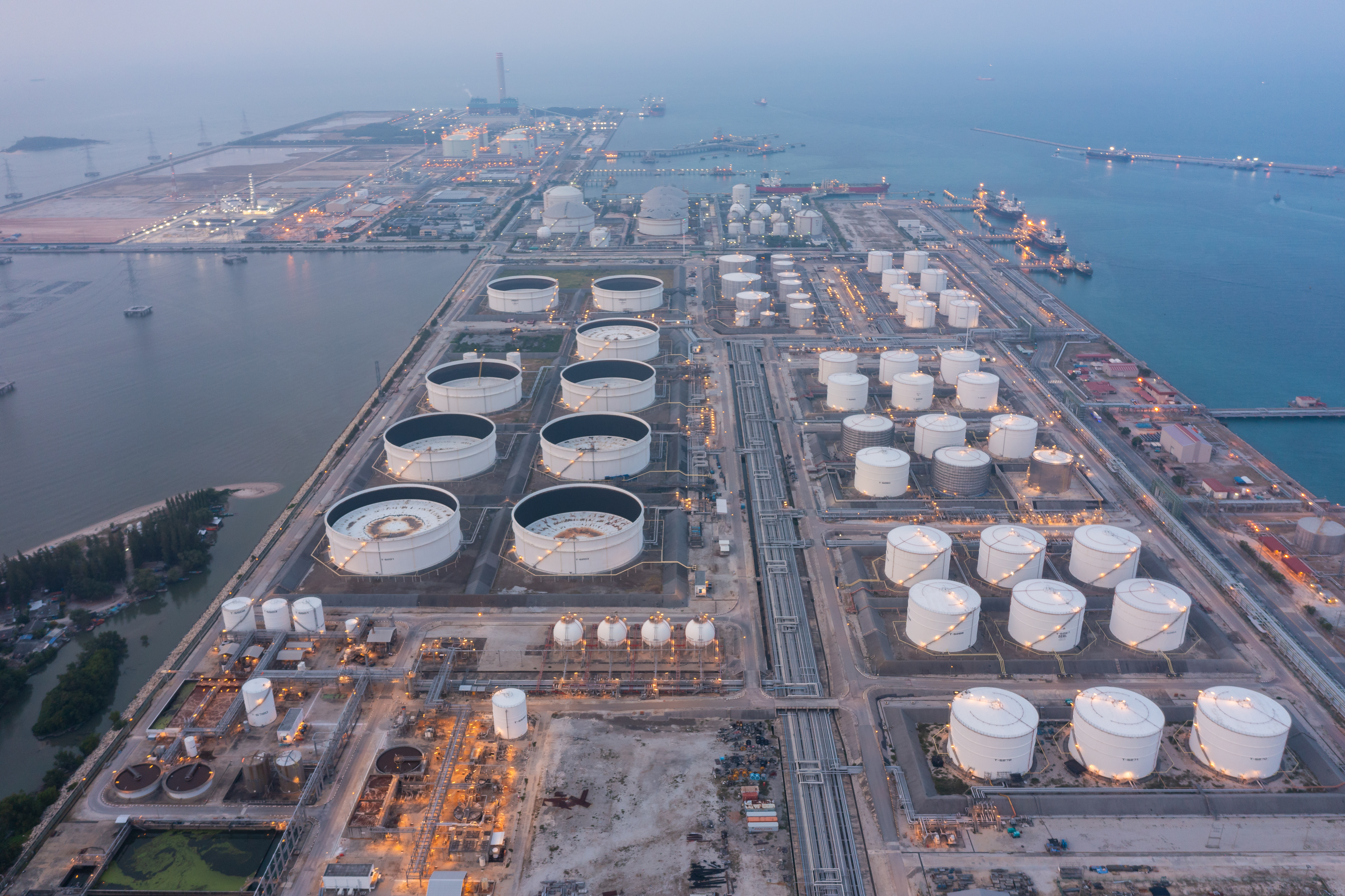
Oil and gas terminals function as centralized storage and logistics hubs. Product arrives by truck, rail or barge, is stored in tank farms and is then transferred out again for distribution.
Pumps in these systems are expected to start and stop reliably, move large volumes repeatedly and handle variations in pressure and operating conditions. Because terminals are downstream operations, efficiency is measured by throughput and uptime rather than process precision.
Terminal operators often standardize on pump platforms from established manufacturers such as Blackmer® to maintain consistency across transfer points and simplify maintenance and parts support.
Fluids Commonly Handled at Terminals
The fluids handled at terminals are primarily refined hydrocarbons. Gasoline, diesel and jet fuel make up the bulk of terminal throughput, each with relatively low viscosity but strict safety and compatibility requirements. Terminals may also handle other refined products depending on location and customer demand.
In addition to product transfer, terminals rely on auxiliary pumping systems for wastewater, saltwater and cleaning fluids associated with tank maintenance and environmental controls.
Pump Technologies Used in Oil & Gas Terminals
In primary transfer applications, sliding vane pumps are often preferred over other positive displacement technologies because they occupy a performance sweet spot that balances flow, pressure capability, vapor handling and wear tolerance better than most alternatives used in terminal environments.
Sliding Vane Pumps for Primary Transfer
Sliding vane pumps are widely used for primary product transfer and are often considered the workhorse technology in oil and gas terminal applications because they align closely with API 676-style positive displacement performance expectations for hydrocarbon service, with some application-specific exceptions.
Their positive displacement design delivers consistent, non-slip flow across changing system pressures while maintaining strong volumetric efficiency with low-viscosity fuels such as gasoline, diesel and jet fuel. This combination places sliding vane pumps in a performance sweet spot where they outperform many gear and other rotary PD technologies for terminal transfer duties.
These pumps self-prime easily, tolerate brief dry-run conditions and handle vapor entrainment better than most gear pump designs. Internal vane extension maintains sealing contact as components wear, keeping throughput stable over time rather than degrading rapidly.
PSG® supports these applications through proven brands such as Blackmer®, recognized for reliability in demanding environments. Blackmer® vane pumps are often considered the workhorse technology in terminal applications for their ability to self-prime, tolerate short dry-run conditions and deliver consistent, non-slip flow, making them well-suited for repeated transfer cycles.
Compared to gear pumps and other PD technologies, sliding vane pumps are often preferred in terminal service because they offer lower shear, better tolerance for variable suction conditions and more forgiving behavior during startup, shutdown and transient operating events.
These characteristics align closely with terminal operating patterns, where repeated start-stop cycles, long suction lines and variable discharge pressures are common.
Gear Pumps for Specialized Applications
Gear pumps remain important in terminal operations, but they are typically reserved for more controlled services rather than primary fuel transfer. While gear pumps provide tight clearances and accurate displacement, those same characteristics make them more sensitive to vapor, debris and suction variability.
In higher-viscosity or specialty transfer scenarios where suction conditions are stable and vapor pressure is low, gear pumps provide durability and predictable performance. In primary terminal transfer, however, their narrower operating envelope often makes sliding vane pumps the preferred choice.
Air-Operated Double Diaphragm (AODD) Pumps for Support and Maintenance
For many support and maintenance tasks, teams rely on AODD pump technology because of its flexibility and ease of deployment.
AODD pumps serve a different purpose within terminals than other types of pumps. They are typically used for supporting functions such as drainage, chemical handling and maintenance activities, often supported by readily available AODD replacement parts to keep systems running.
Their air-driven design allows them to be deployed flexibly in areas where electric power may be limited or where portability is required.
PSG® offers pumps by Wilden® and All-Flo™. These pumps are suitable for safely transferring flammable fluids in areas where flammable gases are present, but be sure to refer to the ATEX code for exact details. For petroleum-based products, BUNALAST™ and Hytrel elastomers offer chemical compatibility and abrasion resistance for fluids used in the oil and gas industry.
Centrifugal Pumps in Auxiliary Systems
While positive displacement pumps dominate product transfer, centrifugal pumps remain common in broader industrial market applications for auxiliary services.
Centrifugal pumps, including ANSI-style designs, are most often found in auxiliary terminal systems. They are commonly used for wastewater and saltwater applications, where high flow and lower pressure requirements predominate.
While centrifugal pumps can be effective in these roles, they are generally not preferred for primary fuel transfer because they lack the self-priming capability and consistent displacement needed under varying terminal conditions.
Key Pump Selection Factors for Terminal Applications
In terminal environments, the preferred pump technology is typically the one that operates most consistently across the widest range of real-world conditions rather than the one optimized for a narrow design point.
Sliding vane pumps are most frequently used for primary transfer because they align well with terminal operating conditions. Gear pumps support more specialized needs, while ANSI-style centrifugal pumps are commonly used where self-priming is not required. Selecting the right pump requires matching the technology to the fluid, the system design and the expectations for uptime and maintenance.
Pump performance and wear are governed by how the fluid behaves inside the system, not by any single specification in isolation. Small shifts in fluid behavior can change efficiency, accelerate wear and reduce reliability over time.
Three fluid-related properties have the greatest influence on long-term pump performance:
Fluid viscosity, which determines internal slip, torque demand and hydraulic efficiency.
Vapor Pressure, which defines the margin between stable operation and flashing or cavitation.
Material compatibility, which controls wear rate, sealing integrity and component life.
These properties cannot be evaluated independently of the system itself. System pressure, suction conditions and duty cycle interact with fluid behavior and must be considered together to understand how the pump will perform over its full operating life.
Reliability is frequently the deciding factor in terminal pump selection. Pumps are expected to run consistently with minimal intervention, and unplanned downtime can quickly disrupt operations and distribution schedules. Lead time and availability also matter, as the ability to deliver a pump quickly can influence purchasing decisions just as much as technical specifications.
Maintenance, Repair and Replacement Considerations
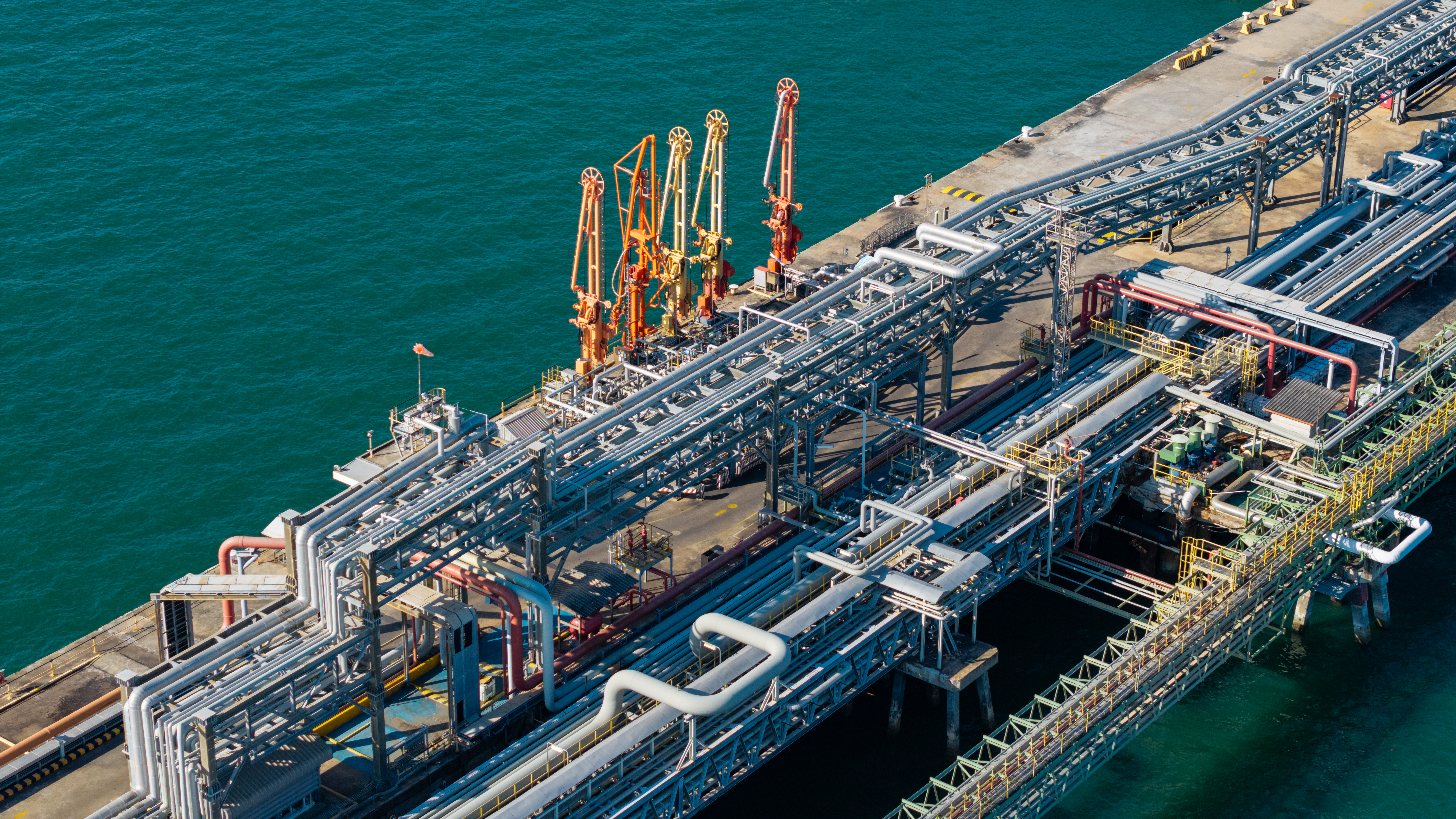
Maintenance strategy is a key consideration in terminal environments. Using genuine pump parts, including specialty solutions like Chem‑Fuse™ diaphragms, helps reduce unplanned downtime and extend equipment life. Repair-versus-replace decisions are usually driven by performance trends rather than sudden failure. A gradual loss of flow or efficiency often signals internal wear.
While many pumps are repairable, repeated maintenance cycles eventually become less economical than replacement, particularly when downtime costs are factored in. For terminals, long-term reliability often outweighs the lowest upfront cost.
Maintaining consistency across pump manufacturers such as Blackmer®, Griswold®, Wilden® and All-Flo™ also simplifies training, spare parts management and long-term maintenance planning across terminal operations.
Partnering on Terminal Pump Solutions
Terminal operators often reference solutions used in other industries, such as agriculture and paints and coatings, when evaluating pump performance under demanding transfer conditions.
Pump selection for oil and gas terminals is ultimately about understanding how these facilities actually operate. The most successful solutions account for real transfer conditions, not just theoretical performance curves.
PSG® works closely with terminal operators to evaluate applications, identify the right pump technology and support long-term reliability across terminal operations.
For many terminal operators, replacement decisions are influenced by the availability of proven pump platforms from Blackmer® and Griswold® ANSI that can be integrated quickly with existing infrastructure.
If you need help selecting a pump for an oil and gas terminal application, our team can assist with sizing, material selection and technology recommendations based on real-world experience. You can contact us directly to speak with a specialist.
Explore Oil and Gas AODD Pumps
Contributors
Marco Bensley
Regional Sales Manager supporting oil & gas terminals and downstream operations across major U.S. terminal markets. Bensley works closely with terminal operators on pump selection, specification and long-term reliability in high-throughput fuel transfer applications.
Doug Cumpston
Western Regional Manager with extensive experience in downstream oil & gas applications. Cumpston supports terminal and industrial customers in selecting pump technologies that balance performance, reliability and operational realities.
Nick Watt
Regional Sales Manager and former application engineer specializing in fuel terminals and hydrocarbon transfer systems. Watt brings hands-on technical experience in positive displacement pump behavior and terminal operating conditions.
Piyush Kapoor
Rotating equipment specialist focused on reliability, lifecycle cost and long-term performance of industrial pumping systems. Kapoor provides insight into repair-versus-replace decisions and equipment durability in demanding terminal environments.
Frequently Asked Questions About Oil & Gas Terminal Pumping
Oil and gas terminals most commonly rely on positive-displacement pumps, particularly sliding-vane pumps, for primary fuel transfer. These pumps are well-suited for terminal operations because they handle continuous transfer, self-prime easily and maintain consistent flow across changing system conditions.
Sliding vane pumps are preferred in terminal environments because they combine reliability with operational flexibility. They can tolerate short dry-run conditions, handle low-viscosity fuels efficiently and provide consistent flow without slipping under pressure. These characteristics align closely with the repeated start-stop cycles and high-throughput demands of terminal operations.
Yes, centrifugal pumps are commonly used in terminals, but primarily for auxiliary services rather than main product transfer. They are often selected for wastewater, saltwater, tank cleaning and other non-product fluids where high flow rates are needed, and self-priming is less critical.
The most important selection factors in terminal applications are flow rate, fluid viscosity, system pressure, material compatibility and expected uptime. Lead time and service availability also play a significant role, as terminals often prioritize reliability and continuity of operations over the lowest initial cost.
Terminal operators typically base repair-versus-replace decisions on performance trends and operational impact. Gradual loss of flow or efficiency often indicates internal wear. When repeated repairs increase downtime risk or maintenance costs, replacement with a properly sized and matched pump becomes the more practical long-term solution.

3005 Highland Parkway
Suite 110
Downers Grove, IL 60515


© 2026 PSG Dover All Rights Reserved