Need A Pump Fast? Shop Our Same-Day Shipping Pumps. SHOP NOW >

What can we help you find?

Just answer a few questions, and our Product Finder will guide you to the right solution!

  • Products

      What can we help you find?

      Just answer a few questions, and our Product Finder will guide you to the right solution!

  • Markets

      What can we help you find?

      Just answer a few questions, and our Product Finder will guide you to the right solution!

  • Blog

      What can we help you find?

      Just answer a few questions, and our Product Finder will guide you to the right solution!

  • Contact Us

      What can we help you find?

      Just answer a few questions, and our Product Finder will guide you to the right solution!

Home > Positive Displacement Technology

Positive Displacement Pumps

A positive displacement pump moves fluid by trapping a fixed volume and forcing it through the discharge, one cycle at a time, regardless of system pressure. Unlike centrifugal pumps, which rely on speed and impellers to create flow, Positive Displacement (PD) pumps deliver consistent volume per stroke, making them the right choice for handling high viscosities, abrasive slurries, shear-sensitive media and applications where flow accuracy matters more than raw throughput.

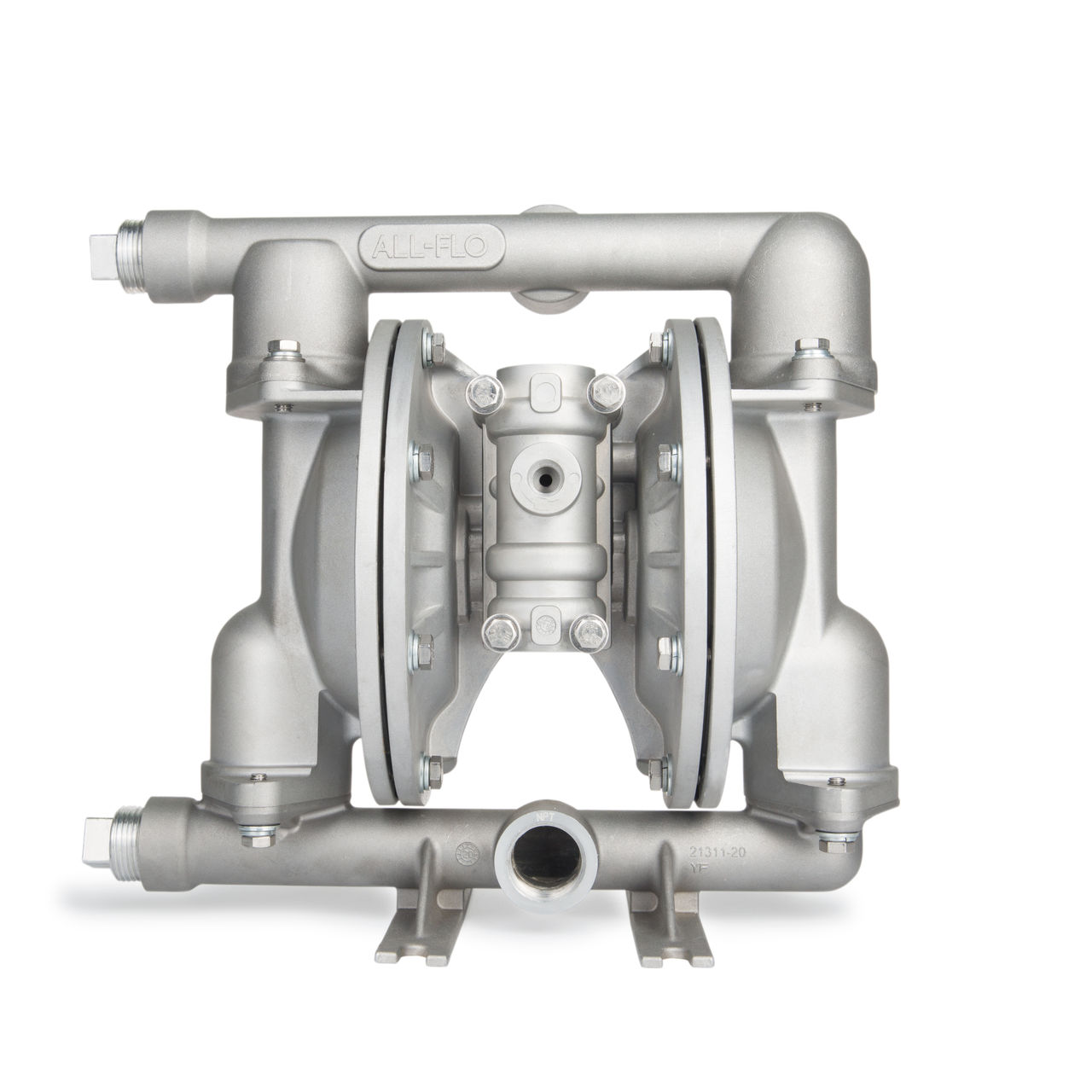
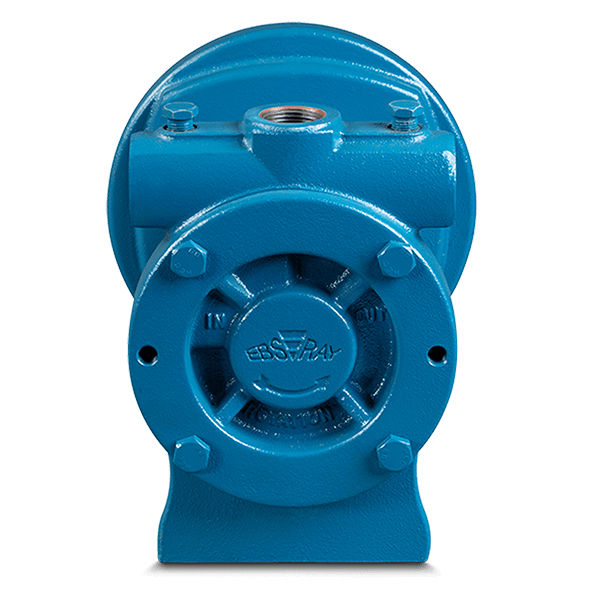
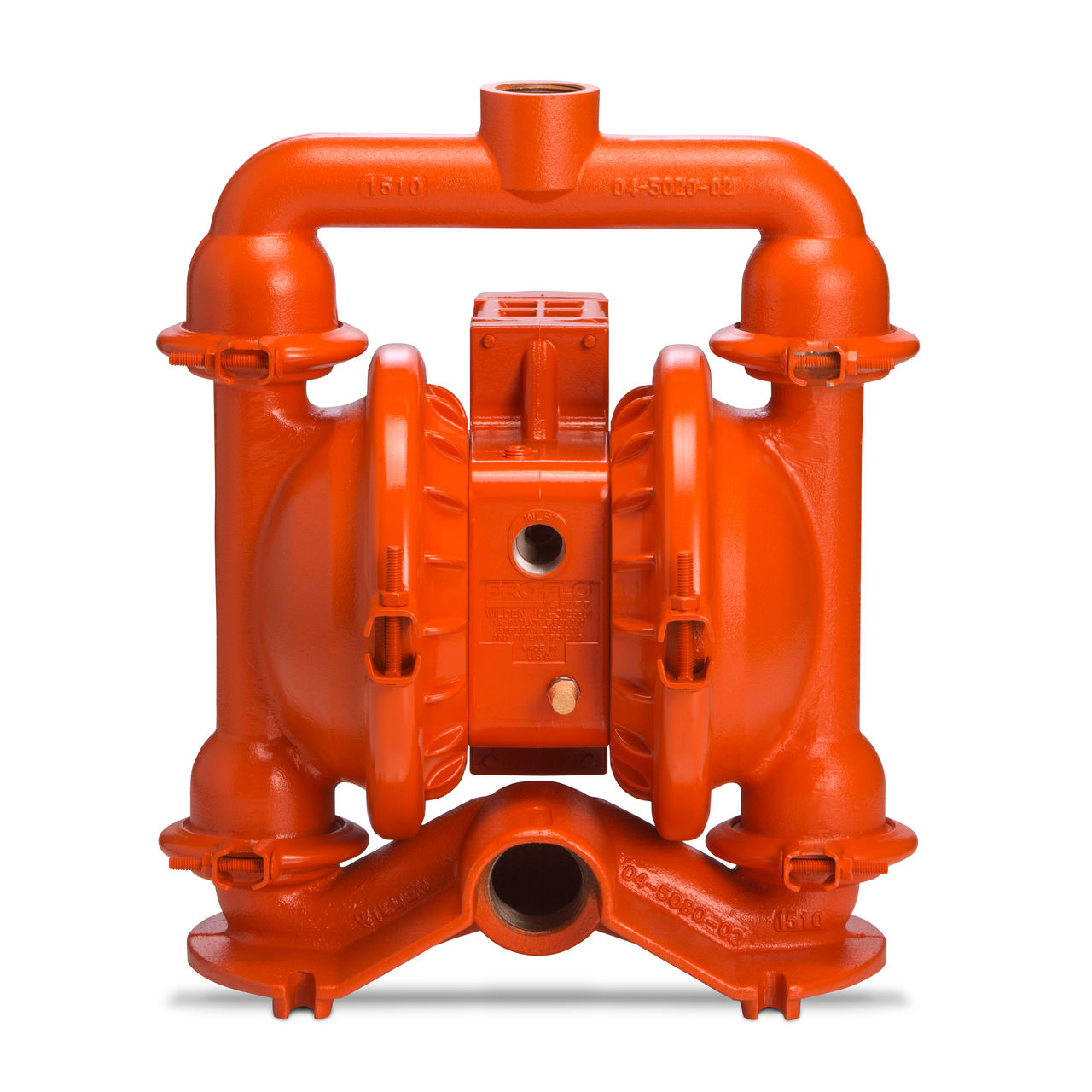
A positive displacement AODD pump

What Is a Positive Displacement Pump?

A Positive Displacement (PD) pump captures a fixed quantity of fluid in a chamber and physically displaces it toward the discharge port. Each cycle moves a known volume, so flow rate stays nearly constant even as discharge pressure rises. This is the defining characteristic of PD pumps and the source of their advantages: they handle viscous fluids, can run dry without immediate damage in most designs, are inherently self-priming and produce flow that doesn't fall off when the system fights back.

The trade-off is that PD pumps generally produce lower flow rates than centrifugal pumps of equivalent size and require pulsation dampening or careful sizing for applications that need smooth, continuous flow. They're not the right tool for high-volume, low-viscosity transfer where centrifugal pumps excel, but for everything else, from chemical metering to slurry handling to viscous food products, PD pumps are the workhorse technology.

Positive Displacement vs. Centrifugal Pumps

The fundamental difference comes down to how each technology creates flow. A centrifugal pump uses a rotating impeller to add velocity to the fluid; that velocity then converts to pressure as the fluid exits the volute. Flow rate depends heavily on system pressure, any push back against a centrifugal pump and its output drops.

A positive displacement pump cares almost nothing about discharge pressure (within mechanical limits). It moves the same volume per cycle whether the downstream system is wide open or nearly blocked. This makes PD pumps the right choice when you need predictable flow regardless of pipe length, elevation changes, valve position or filter condition.

For a deeper comparison specific to AODD vs. centrifugal pumps, see our blog post on why "either works" may actually be wrong.

The Major Types of Positive Displacement Pumps

Positive displacement pumps come in two broad families, reciprocating and rotary, with several pump types in each. Each type handles different fluid characteristics, flow rates and pressure ranges. Here's how the major categories compare:

  • Diaphragm pumps (reciprocating): flexible diaphragms flex back and forth to draw and discharge fluid. Air-Operated Double Diaphragm (AODD) pumps are the most common industrial variant. Excel at chemical transfer, slurries, and abrasive media.

  • Piston and plunger pumps (reciprocating): pistons or plungers drive fluid through one-way valves. High pressure capability, common in metering and high-pressure cleaning.

  • Gear pumps (rotary): meshing gears trap and move fluid. Smooth, pulse-free flow for viscous fluids like oils, fuels and adhesives.

  • Lobe pumps (rotary): counter-rotating lobes move fluid without contact between rotating elements. Standard in food, beverage and hygienic applications.

  • Peristaltic pumps (rotary): rollers compress flexible tubing to push fluid through. Fully isolated fluid path, ideal for sterile or aggressive chemicals.

  • Vane pumps (rotary): sliding vanes inside a rotor create variable chambers. Common in fuel transfer and lower-viscosity applications.

  • Progressive cavity pumps (rotary): a helical rotor inside a stator moves fluid in a continuous, low-shear motion. Strong fit for high viscosity and abrasive slurries.

Diaphragm Pumps: How AODD Technology Works

Diaphragm pumps are the most commonly specified positive displacement pump in industrial fluid transfer, and AODD — air-operated double diaphragm — is the dominant variant. The acronym AODD stands for "air-operated double diaphragm," referring to a pump powered by compressed air with two flexible diaphragms working in alternating chambers.

Inside an AODD pump, two diaphragms are connected by a shaft. Compressed air pushes one diaphragm out (discharging fluid from its chamber) while pulling the other in (drawing fluid into its chamber through the inlet). A pneumatic shuttle valve switches the air supply between the two chambers, reversing the cycle. Check valves on each chamber's inlet and outlet ensure fluid only moves in one direction.

The result is a pump with no shaft seals, no rotating parts in contact with the fluid, and no electricity required to operate. AODD pumps are inherently self-priming, can run dry without damage, handle solids and viscous fluids and are intrinsically safe for hazardous environments where electric pumps aren't an option.

Diaphragm Pump Diagram

Below is a cutaway diagram of a typical AODD pump, showing the two pump chambers, diaphragms, shuttle valve, and check valves. The arrows indicate the direction of fluid flow during one half of the operating cycle.

A diagram of a diaphragm pump showing the right stroke, midstroke and left stroke

The pneumatic shuttle valve switches air supply between chambers as each diaphragm reaches the end of its stroke, creating a continuous pulsing flow. Because nothing rotates inside the fluid path, AODD pumps handle abrasive and shear-sensitive media that would damage centrifugal or gear pumps.

When to Choose a Diaphragm Pump

AODD diaphragm pumps are the right tool when one or more of the following apply:

  • You're transferring corrosive chemicals where seal failure on a centrifugal pump would be catastrophic

  • The fluid contains solids, slurries or abrasives that would erode an impeller

  • You need a pump that can run dry temporarily without damage

  • Your operating environment is hazardous (explosive atmospheres, ATEX zones) and electric pumps aren't safe

  • You need a pump that self-primes from below the fluid level

  • Flow rate consistency matters more than maximum throughput

  • You're handling viscous or shear-sensitive products like food, beverage, or pharmaceutical fluids

If your application falls outside these conditions, particularly if you need very high flow rates of low-viscosity, clean fluid, a centrifugal pump is likely a better fit. Most industrial sites use both technologies for different jobs.

Wilden® and All-Flo™: PSG's® AODD Pump Brands

PSG® Store carries air-operated diaphragm pumps from two PSG®-family brands.

  1. Wilden® invented the AODD pump in 1955 and remains the industry reference for high-performance air-operated pumps in demanding applications.
  2. All-Flo™ offers reliable, AODD pumps with fast availability for general industrial use.

Both brands ship from PSG® Store with manufacturer warranty and access to genuine diaphragm pump parts.

Browse the Diaphragm Pump Catalog

Ready to spec a pump? Browse PSG® Store's full catalog of industrial diaphragm pumps from Wilden® and All-Flo™, filterable by brand, material and port size. In-Stock pumps ship same-day; other configurations ship direct from the manufacturer with PSG® Store handling order, support and warranty.

Need Assistance? Call our pump experts at (616)-407-7103 or complete a contact us form.

Frequently Asked Questions

AODD stands for "air-operated double diaphragm." It refers to a positive displacement pump powered by compressed air, using two flexible diaphragms working in alternating chambers to move fluid.

Yes. Diaphragm pumps are a type of reciprocating positive displacement pump. They trap a fixed volume of fluid in each chamber and discharge it via the flexing motion of the diaphragm, delivering consistent flow per cycle regardless of discharge pressure.

Positive displacement pumps move a fixed volume of fluid per cycle, with flow rate largely independent of system pressure. Non-positive (centrifugal) pumps move fluid through impeller velocity, with flow rate that drops as pressure rises. PD pumps suit viscous, abrasive or precision-flow applications; centrifugal pumps suit high-volume, low-viscosity transfer.

Yes, in most cases. Because AODD diaphragm pumps have no rotating parts in contact with the fluid and no shaft seals to dry out, they can run dry temporarily without immediate damage. Extended dry running can still wear diaphragms and is not recommended as a normal operating condition.

PD pumps fall into two broad families. Reciprocating types include diaphragm, piston, and plunger pumps. Rotary types include gear, lobe, peristaltic, vane, and progressive cavity pumps. Diaphragm pumps — particularly AODD pumps — are the most common in industrial chemical transfer and slurry handling.