Need A Pump Fast? Shop Our Same-Day Shipping Pumps. SHOP NOW >


Why Do Modern AODD Pumps Last Longer?
Feb 1, 2026
Modern air-operated double diaphragm (AODD) pumps last longer, not because of mechanical redesign alone, but because diaphragm materials have evolved to resist chemical attack, flex fatigue and temperature stress. Advances in elastomers and PTFE construction have dramatically improved reliability in harsh industrial environments.
Contributors
This blog was developed using expert insights from PSG® subject matter experts with extensive experience in diaphragm pump design, material selection and failure analysis across chemical processing, wastewater, terminals and industrial applications.
Historically, diaphragm life was the limiting factor in AODD pump reliability. Early elastomer compounds suffered from rapid fatigue cracking, chemical swelling and thermal degradation, particularly in continuous-duty or aggressive fluid service.
Failures were often accepted as routine maintenance rather than engineering limitations. Pumps performed well mechanically, but diaphragm materials could not withstand repeated flex cycles combined with chemical exposure and temperature swings.
As industrial processes became more aggressive and uptime expectations increased, diaphragm material science became the primary driver of AODD pump longevity.
Flex Fatigue: The Core Mechanical Challenge
Every diaphragm stroke subjects the material to repeated bending, stretching and compression. In continuous service, diaphragms may flex millions of times per year.
Early rubber compounds developed microcracks at stress-concentration points. These cracks propagated with each cycle until rupture occurred, often without external warning.
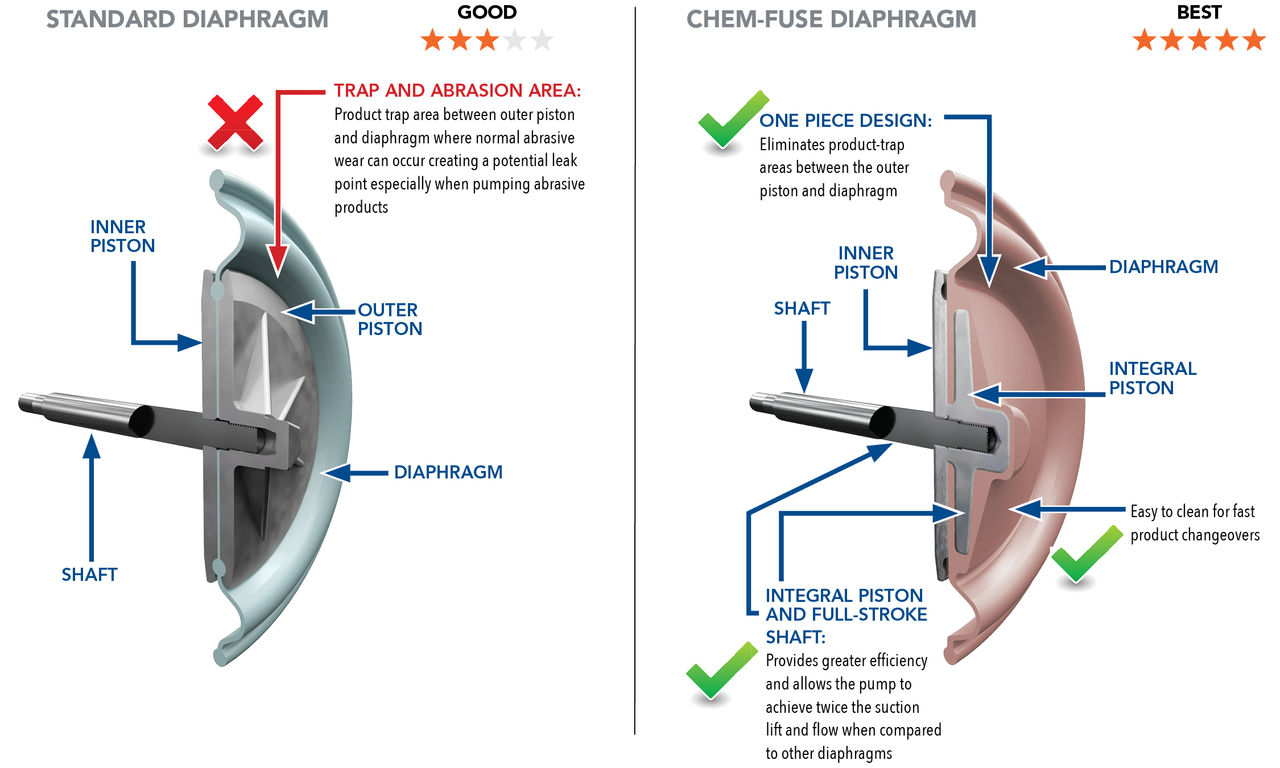
Modern elastomer engineering focuses on improving tear resistance, elasticity retention and stress distribution. Compounds are now formulated to maintain molecular integrity under high-cycle loading, significantly extending service life.
Chemical Resistance and Swell Control
Chemical attack was another dominant failure mechanism in early diaphragm pumps. Many elastomers absorbed solvents, hydrocarbons and acids, leading to swelling, softening or embrittlement.
Swollen diaphragms distorted sealing surfaces and increased flex stress. Embrittled materials cracked prematurely.
Modern elastomer blends are engineered for narrow permeability, improved crosslink stability and resistance to specific chemical families. This reduces volumetric swell while preserving flexibility.
Manufacturers such as Wilden® and All-Flo™ now offer multiple diaphragm material options optimized for hydrocarbons, solvents, acids and caustics, allowing pumps to be matched closely to fluid chemistry rather than relying on generic rubber compounds.
The Role of PTFE Diaphragms in Aggressive Service
Polytetrafluoroethylene (PTFE) diaphragms revolutionized chemical handling by providing near-universal chemical resistance.
PTFE does not absorb most chemicals and maintains structural integrity across wide temperature ranges. This makes it ideal for corrosive, solvent-rich and high-purity applications.
However, pure PTFE lacks the flex fatigue resistance of elastomers. Early PTFE diaphragms were prone to cracking due to stiffness.
Modern PTFE diaphragm designs address this limitation through composite construction, bonding PTFE faces to elastomer backings that absorb flex stress while preserving chemical resistance.
This hybrid approach delivers both durability and compatibility in environments that previously destroyed conventional diaphragms.
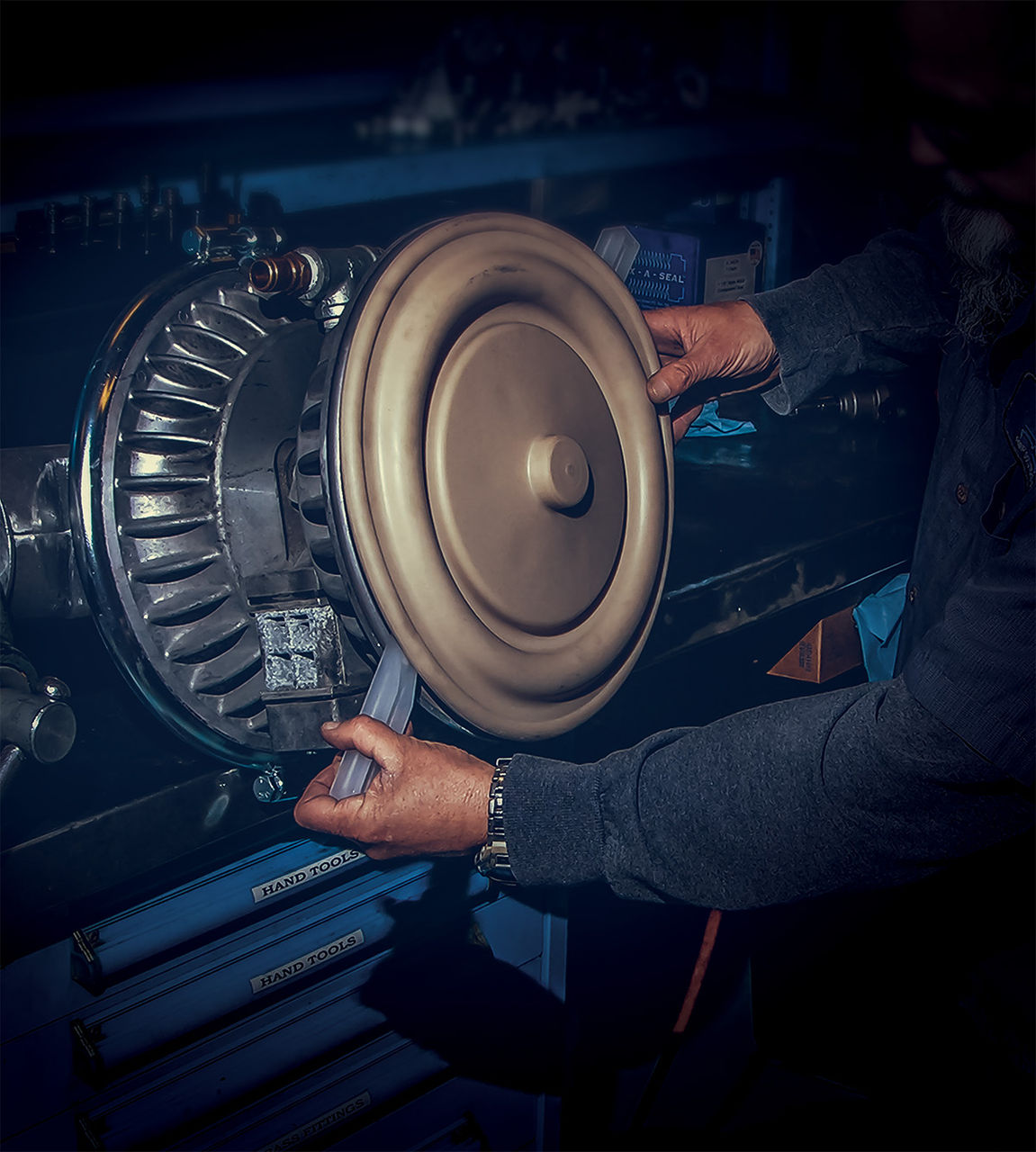
Modern diaphragm materials resist chemical attacks and flex fatigue but wear still occurs over time in continuous-duty and aggressive service. Replacing diaphragms and valve components with genuine parts helps support material integrity, sealing performance and long-term pump reliability.
Temperature Stability and Long-Term Elasticity
Temperature extremes accelerate material degradation. Heat increases chemical reaction rates and softens many elastomers. Cold temperatures stiffen materials and raise flex stress.
Modern diaphragm compounds are formulated to retain elasticity across broader temperature ranges, reducing fatigue damage during startup, shutdown and seasonal changes.
Improved thermal stability also slows chemical attack and oxidation, further extending service intervals.
Predictable Wear Instead of Sudden Failure
One of the most important outcomes of material innovation is the predictability of failure.
Older diaphragms often failed suddenly once cracks reached critical size. Modern materials degrade more gradually, showing early signs such as slight performance loss or minor leakage before rupture.
This allows maintenance teams to schedule replacements proactively rather than responding to emergency shutdowns.
Predictable wear is a major contributor to improved uptime in modern AODD pump technology.
How Material Innovation Expands AODD Applications
As diaphragm durability improved, AODD pumps moved beyond intermittent utility roles into continuous-duty and mission-critical services.
They are now widely used for chemical transfer, produced water handling, abrasive slurry movement and terminal unloading where earlier diaphragm technologies would have failed rapidly.
This expansion is driven not by changes in pump mechanics but by the ability of modern materials to survive harsh operating conditions.
AODD Pumps Alongside Other Pump Technologies
While diaphragm material innovation has greatly improved AODD pump longevity, technology selection remains application dependent.
Centrifugal pumps, including designs from manufacturers such as Griswold®, continue to perform well in clean, stable services where efficiency and continuous flow are priorities.
Sliding vane pumps from Blackmer® deliver consistent displacement in terminal and transfer application markets with variable pressure and viscosity.
AODD pumps from Wilden® and All-Flo™ excel where chemical compatibility, air-entrainment tolerance, and intermittent operation dominate system behavior.
Understanding material limits and system realities ensures each technology is applied where it performs best.
Designing for Material Reality
Effective AODD pump selection begins with a realistic assessment of chemical exposure, temperature range and duty cycle.
Material compatibility charts should be treated as baseline guidance and adjusted for continuous exposure and worst-case conditions. The PSG® Store product pages include a chemical compatibility tool that allows you to select a specific chemical and view material compatibility ratings for both wetted path and diaphragm materials. Combined with wet-end configuration options and genuine replacement kits, this makes it easier to match pump materials to real fluid conditions for long-term reliability.
Selecting diaphragm materials with a margin for degradation rather than minimum acceptability significantly improves lifecycle performance.
Diaphragm failures are rarely random. They reflect interactions between material properties, fluid chemistry, temperature and operating stress.
Application specialists evaluate these variables together to recommend diaphragm materials and pump configurations that align with long-term operating reality. Early engagement reduces chronic failures and extends service life. Technical support is available through the contact us page.
Contributors
Rob Jack
Rob Jack is a technical authority in air-operated double diaphragm pumps with decades of experience in diaphragm material selection, failure analysis and chemical compatibility troubleshooting.
Steve Cox
Steve Cox brings broad industrial experience across diaphragm, vane and centrifugal pump technologies, with a focus on lifecycle reliability and system-level performance improvement.
Jeff Peterson
Jeff Peterson specializes in chemical transfer and containment-focused pump applications, including material-driven performance optimization in aggressive fluid service.

3005 Highland Parkway
Suite 110
Downers Grove, IL 60515


© 2026 PSG Dover All Rights Reserved