


What Is PSI? How to Size Your CFM for an AODD Pump
Apr 10, 2026
PSI tells you how much pressure the compressed air is pushing with. CFM tells you how much air volume is actually moving through the system.
Contributors
This blog was developed using insights from PSG® subject-matter experts who regularly help customers size AODD pumps when the real problem is air supply, not the pump itself. It also references PSG® manufacturer resources on AODD operation, performance curves, and energy-efficient air systems.
PSI means pounds per square inch. In an AODD system, it is the measurement of air pressure being delivered to the pump. Pressure is the push behind the air supply. It helps the pump overcome discharge pressure, lift, piping losses, and whatever resistance the system creates.
That is why PSI matters, but it only answers one part of the question. It tells you how hard the air can push. It does not tell you how much air is actually available to keep the pump cycling fast enough.
What CFM Means
CFM means cubic feet per minute. In an AODD application, CFM is the airflow volume the compressor and air system can actually deliver. This is the air that moves through the pump and creates stroke after stroke. If PSI is the push, CFM is the supply.
That is why a pump can have plenty of air pressure at the regulator and still underperform. If the compressor, hose, regulator, or fittings cannot deliver enough airflow, the pump may cycle slowly, stall, or never reach the expected liquid flow.
Why PSI Alone Does Not Size an AODD Pump
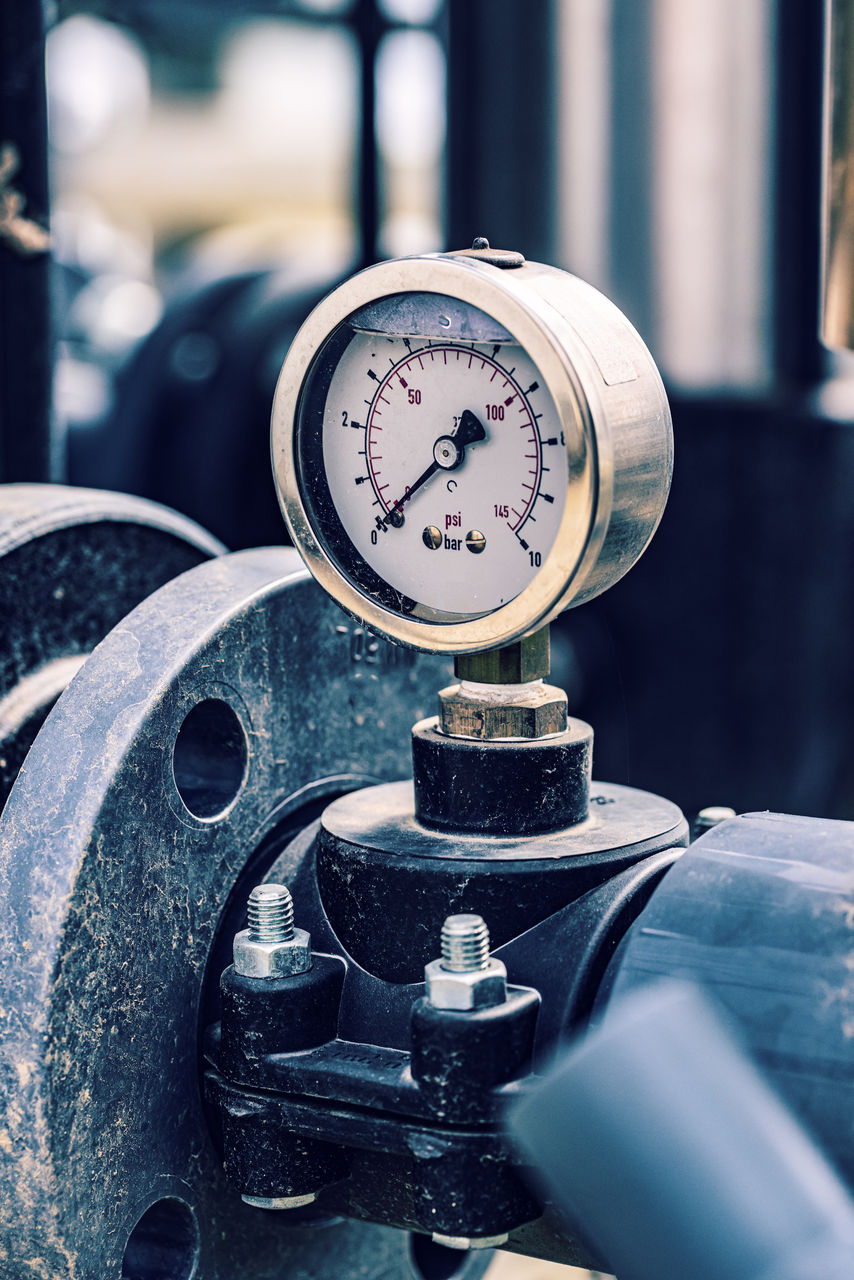
One of the most common AODD sizing mistakes is assuming that a high PSI reading means the air side is fully covered. In practice, it does not. A pump can show 100 PSI at the inlet and still not perform if the air system cannot move enough volume.
This is a frequent field misunderstanding because pressure is easy to see on a gauge, while airflow shortages are less obvious. The pump only performs the way the curve says it should when both pressure and volume are available at the same time.
How an AODD Pump Turns Air Into Liquid Flow
An AODD pump uses compressed air in an alternating cycle. Air enters one chamber, pushes one diaphragm inward, and moves liquid out, while the opposite diaphragm pulls inward to draw liquid in. Then the air valve shifts and the cycle repeats.
That repeating cycle is why airflow matters so much. More available air volume generally allows more cycling and more liquid flow, as long as the pump is operating inside its usable range.
Running a pump beyond its rated PSI, or with components that can no longer hold pressure, puts your entire system at risk. Worn seals, degraded diaphragms, and fatigued housings gradually lose their ability to contain pressure safely. Replacing these components with genuine parts ensures your pump maintains its rated pressure capacity with the materials and tolerances it was designed around. Off-spec replacements may not withstand the same pressures, creating leak paths and potential safety hazards. Browse our genuine parts page to keep your pump operating within its designed limits.
A Simple Way to Think About PSI vs. CFM
If you need a simple explanation for non-engineers, think of it this way:
• PSI = how hard the air can push.
• CFM = how much air is available to do the work.
An AODD pump needs both. High PSI with low CFM is like having pressure behind a narrow straw. The gauge can look good, but the pump still will not get enough air to perform.
The Best Way to Size CFM: Use the Pump's Performance Curve
PSG's® AODD performance curve guide lays out the most reliable method. First, define the liquid operating point - usually the target flow rate and discharge pressure. Then use the performance curve to read the air inlet pressure required at that point and the SCFM needed to sustain it.
This is the right method because AODD air demand changes with the job. The same pump does not use the same amount of air at every flow and pressure. Air demand rises and falls with the operating point.
How to Read the Curve for Air Sizing
For most AODD performance charts, the sizing sequence looks like this:
Start with the liquid flow you actually need, not the pump's maximum flow rating.
Define the real discharge pressure the system creates.
Find the point where that flow and pressure intersect on the pump's performance chart.
Read the required air inlet pressure from the curve.
Read the air consumption at that same point to estimate SCFM.
Add margin for real-world losses in regulators, hose size, fittings, and other air users on the line.
That final step matters because the curve assumes the pump receives the air it needs. In the field, restrictive hose runs, quick-connects, small regulators, and shared compressor demand can reduce what the pump actually sees.
A Useful Rule of Thumb - But Only a Starting Point
From field experience, one rough first-pass mental model is to think of CFM and gallons per minute as loosely analogous in some AODD discussions. That can help non-specialists understand why larger liquid flow requires more airflow. But it is only a shortcut, not a sizing method.
Actual air demand varies by pump size, discharge pressure, fluid type, diaphragm material, air distribution system, and where the operating point lands on the curve. Use the rule of thumb for conversation, then use the curve for the real answer.
What Else Can Starve the Pump Even if the Compressor Looks Big Enough
A compressor can be large on paper and still fail the application if the delivery path is restrictive. Common hidden air-side problems include:
• Undersized air hose.
• Long hose runs that create pressure loss.
• Small or restrictive regulators.
• Dirty filters or water-contaminated air treatment components.
• Quick-connects that choke airflow.
• Multiple tools or pumps pulling from the same compressor at once.
This is why sizing the compressor alone is not enough. The air delivery system must also be able to move the required volume to the pump.
Why Air Demand Also Affects Operating Cost
CFM is not only a performance issue. It is also a cost issue. More airflow means more compressor work, which means higher energy use.
That is one reason PSG® emphasizes efficient air systems such as Pro-Flo SHIFT™ and broader efficiency resources like Wilden's® efficiency page, which focus on reducing air consumption while maintaining output.
If two pumps can hit the same liquid duty but one uses less air to get there, the lower-air option can reduce compressor cost over time.
Common Sizing Mistakes
These are the most common mistakes when people try to size PSI and CFM for an AODD pump:
• Using PSI alone and ignoring air volume.
• Sizing to the pump's maximum flow instead of the actual operating point.
• Ignoring the discharge pressure the system must overcome.
• Assuming the compressor nameplate CFM is the same as delivered CFM at the pump.
• Ignoring hose size, regulator losses, and shared air demand.
• Skipping the performance curve and relying only on guesswork or an old rule of thumb.
A Simple Sizing Checklist
Before finalizing the air side, confirm these inputs:
• Required liquid flow rate.
• Actual discharge pressure.
• Pump model and its published performance curve.
• Required air inlet pressure at the target operating point.
• Required SCFM at that same point.
• Air hose size and run length.
• Compressor capacity after other loads are considered.
The Simplest Rule of Thumb
If the pump is not reaching the expected flow, do not ask only, "Do I have enough PSI?" Ask, "Do I have enough airflow at the pump for this exact operating point?" That is the question that usually finds the real problem faster.
For AODD pumps, pressure gets the pump moving. Air volume is what keeps it performing.
Next Steps: Find the Right Pump and Air Requirement Faster
If you need help narrowing down the correct AODD size or understanding the air requirement, start with the Pump Finder or contact the PSG® Store team to review the application in more detail.
Contributors
Doug Cumpston
Doug Cumpston supports AODD and industrial pump applications where the real sizing challenge is often on the air side. His practical guidance emphasizes that air-operated diaphragm pumps need both pressure and airflow, and that hose size, compressor capacity, and system restrictions all affect actual output.
Nick Watt
Nick Watt works across positive-displacement pump technologies and regularly explains the difference between what a pump can do on paper and what it costs to run in practice. His application perspective often centers on air consumption, energy efficiency, and why lower-CFM operation can reduce long-term operating cost.

3005 Highland Parkway
Suite 110
Downers Grove, IL 60515


© 2026 PSG Dover All Rights Reserved