


Is Your Pump’s Noise Good or Bad?
Apr 10, 2026
Pump noise is only “good” when it is consistent, expected for the pump type, and stable over time. Most damaging pump noises are caused by suction problems (air leaks, restrictions, vapor formation/cavitation) or mechanical problems (bearing wear, rubbing, loose mounts).
Contributors
This blog was developed using insights from PSG® subject-matter experts who troubleshoot pump reliability in the field. It also references PSG® manufacturer resources on cavitation, NPSH, suction friction, and AODD troubleshooting.
Pumps are mechanical devices, some noise is normal. What matters is whether the sound matches what the pump should sound like in its operating range. In many facilities, “bad noise” is one of the earliest warning signs that a pump is about to lose capacity, lose prime, or fail a seal or diaphragm.
The goal is not to eliminate all sound. The goal is to catch the change early, before noise becomes downtime.
Start Safe: What to Do Before You “Listen for Clues”
Before troubleshooting, follow your facility safety procedures. Pumps can be moving hazardous chemicals, hot fluids, or flammables. If you need to inspect, lock out energy sources, depressurize the line, and use appropriate PPE. If the noise is severe or accompanied by shaking piping, treat it as an imminent failure risk.
Normal vs. Abnormal: What “Good Noise” Sounds Like by Pump Type
Use these as baseline expectations, then look for changes.
AODD pumps (air-operated double diaphragm)
Normal: rhythmic “thump” or cycling sound that matches pump speed; exhaust “puff” at the muffler; consistent cadence under stable conditions. Abnormal: racing/runaway cycling, chattering, stalling/stop-start shifting, or liquid coming out of the exhaust.
Centrifugal pumps
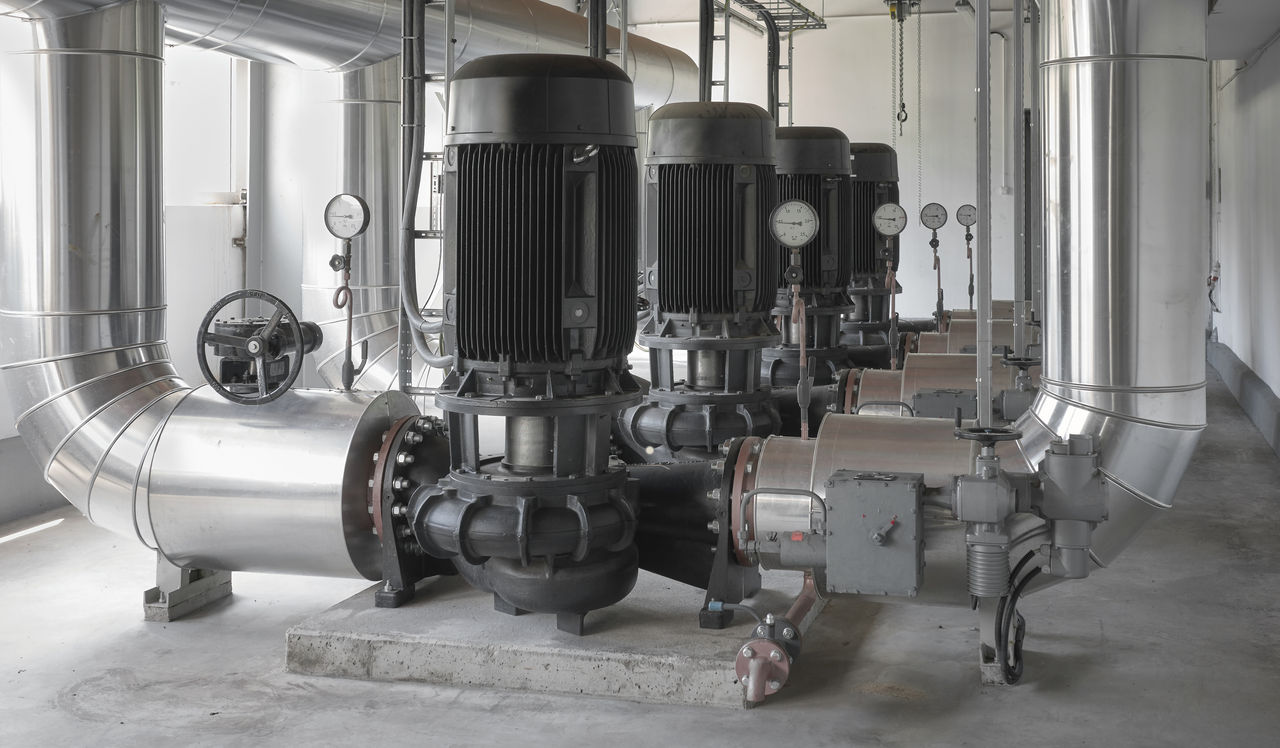
Normal: steady “whoosh” or hum at stable speed; modest vibration; consistent bearing sound. Abnormal: gravel/“marbles” sound (often cavitation), high-pitched squeal/whine (bearings), scraping/rubbing (impeller contact), or rapid vibration increases.
Positive displacement pumps (vane, gear, lobe, etc.)
Normal: consistent mechanical tone; steady pulsation depending on design; stable vibration signature. Abnormal: rattling/hammering, sudden growl under load, relief-valve chatter, or cavitation-like noise during priming or high flow demand.
For a cavitation explanation from a PD perspective, see Blackmer’s® cavitation causes and prevention.
Unusual noise often points to worn or failing internal components, degraded bearings, damaged impellers, or deteriorating seals that allow air ingestion and vibration. Replacing these parts with genuine components restores proper clearances and balance, eliminating noise at its source rather than just dampening the symptoms. Aftermarket substitutes may not meet the same dimensional or material specifications, allowing the underlying issue to persist or worsen. Explore our genuine parts page to find the right replacements for your pump.
The “Sound Dictionary”: What Bad Noises Usually Mean
These are common sound-to-cause patterns that show up across pump types:
• Gravel / marbles / crackling: Often cavitation or vapor formation at the inlet (NPSHa deficit, hot fluid, suction restriction).
• Racing / runaway speed (especially on AODD): Often suction air leak, empty supply, flashing, or suction restriction causing the pump to move air instead of liquid.
• Chatter / rapid clicking: Often check valve chatter (debris, worn balls/seats) or intermittent air ingestion.
• Squeal / high-pitched whine: Often bearing distress, misalignment, or dry-running contact surfaces.
• Knock / bang: Loose mounting, pipe strain, water hammer, or intermittent blockage/slug flow.
• Rubbing / scraping: Mechanical contact (impeller rub, rotor contact, worn wear plates) and should be treated as urgent.
The Fastest Diagnostic Rule: Check Suction First
In the field, many “pump noises” are suction noises. Before you rebuild anything, look for the system conditions that create vapor and air ingestion:
• Is the tank level low (minimum static head)?
• Did the fluid temperature rise (higher vapor pressure)?
• Is the suction strainer clogged or partially blocked?
• Are suction valves fully open (not partially closed)?
• Is suction piping undersized, too long, or full of fittings (high friction losses)?
• Are there suction air leaks (loose clamps, cracked hoses, bad gaskets)?
If you want a system-level explanation of vapor formation and why it often presents as prime loss/noise first, see How Do Pumps Lose Prime?.
NPSH: The Most Common Reason Cavitation Noise Appears
Cavitation noise is usually an NPSH margin problem. NPSH is the inlet pressure margin above vapor pressure. If that margin collapses, the liquid can flash into vapor at the inlet, then collapse inside the pump and create the crackling/gravel sound and vibration.
For practical NPSHa and cavitation prevention guidance, see Griswold’s® Determining system NPSHa and preventing cavitation with NPSHa calculations.
For suction friction and cavitation explained in field terms, see Wilden’s® Cavitation and Pipe Friction Guide (PDF).
AODD-Specific Noise Clues (What to Check)
AODD pumps have a unique advantage: the sound of the cycle is a diagnostic tool. When the pump cycles differently than normal, it usually points to one of a few causes.
• Fast cycling with little discharge: suction air leak, empty supply, or flashing at the inlet.
• Slow cycling / low output: insufficient air volume (CFM), restricted air line, or clogged muffler.
• Erratic shifting / stalling: air valve/ADS issue, or wet-end check valves not sealing.
• Chattering: debris in check valves or intermittent air ingestion.
• Liquid from muffler/exhaust: diaphragm failure or liquid-side seal breach, shut down and rebuild.
If symptoms point to the air distribution system, Wilden® provides targeted guides such as Pro-Flo SHIFT™ ADS troubleshooting and Accu-Flo™ ADS troubleshooting.
When to Shut Down Immediately
Noise is not always a “keep running” situation. Shut down and investigate if you see:
• Sudden, violent vibration or piping movement.
• Rubbing/scraping noises (mechanical contact).
• Rapid temperature rise at bearings/seals or a burning smell.
• Visible leakage of hazardous fluids or loss of containment.
• Cavitation noise that persists after suction checks and flow reduction.
• Liquid discharging from an AODD muffler/exhaust.
How to Reduce Noise (The Fix Is Usually System + Operating Practice)
If you want quieter, more reliable operation, focus on the changes that increase inlet margin and reduce stress:
• Reduce suction restrictions: larger/shorter suction piping, fewer fittings, clean strainers.
• Operate within the pump’s stable range: avoid “maxing out” flow where NPSHr climbs.
• Control temperature where possible (lower vapor pressure = less cavitation risk).
• Eliminate suction air leaks and verify gaskets/clamps.
• For AODD: size the air supply for CFM (not just PSI) and keep exhaust paths clear.
• Address mechanical mounting: secure base, reduce pipe strain, align rotating equipment properly.
Next Steps: Get Help Diagnosing the Cause
If noise is recurring (or you suspect cavitation/NPSH issues), document the conditions when it happens (tank level, temperature, flow, suction pressure if available), then contact the PSG® Store team to discuss your application.
Contributors
Rob Jack
Rob Jack is a long-tenured AODD pump technical authority with extensive troubleshooting experience. He frequently uses cycling sound and exhaust behavior as fast diagnostic clues for air-side issues, suction air ingestion, and wet-end valve/diaphragm problems.

3005 Highland Parkway
Suite 110
Downers Grove, IL 60515


© 2026 PSG Dover All Rights Reserved